Koe-kroost

[English translation underneath]

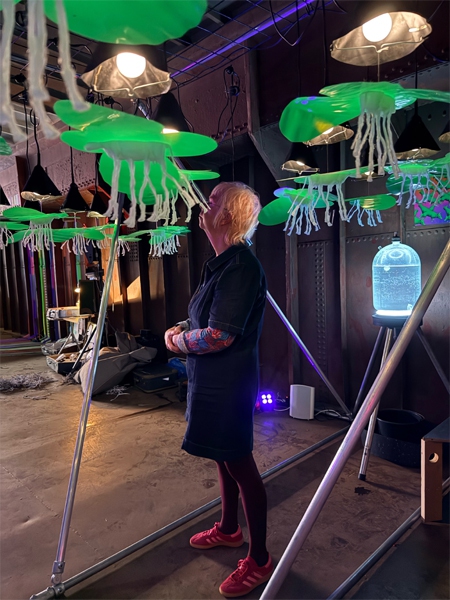
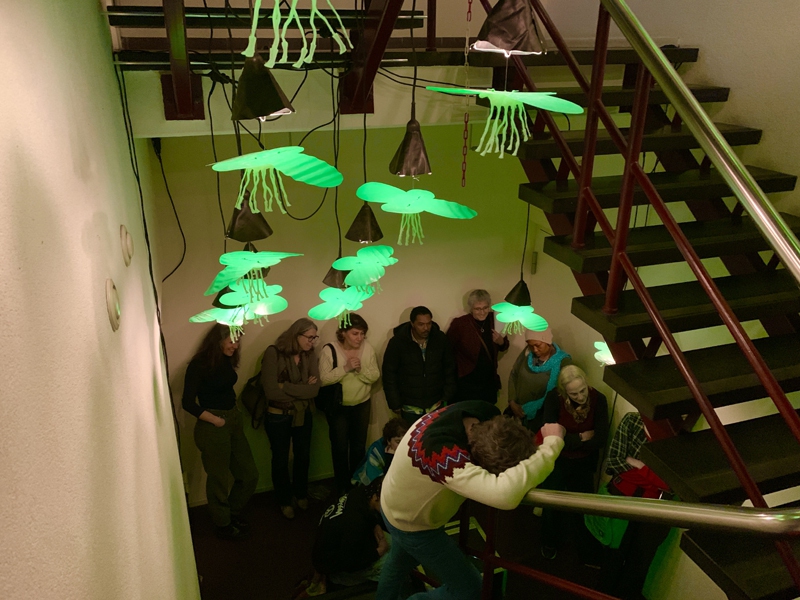
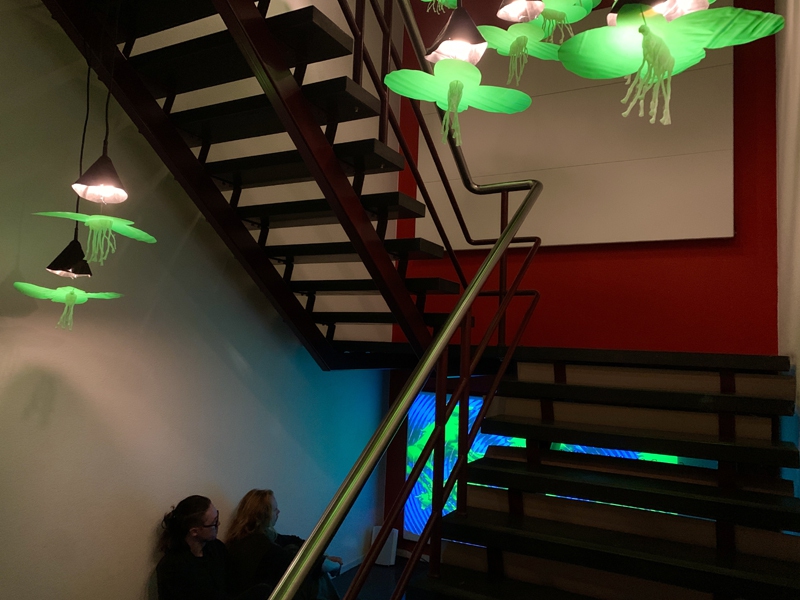
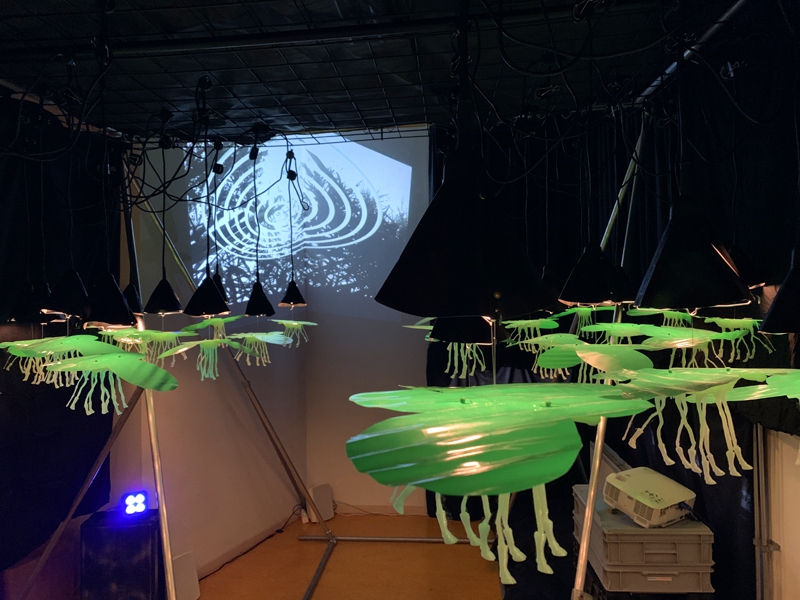
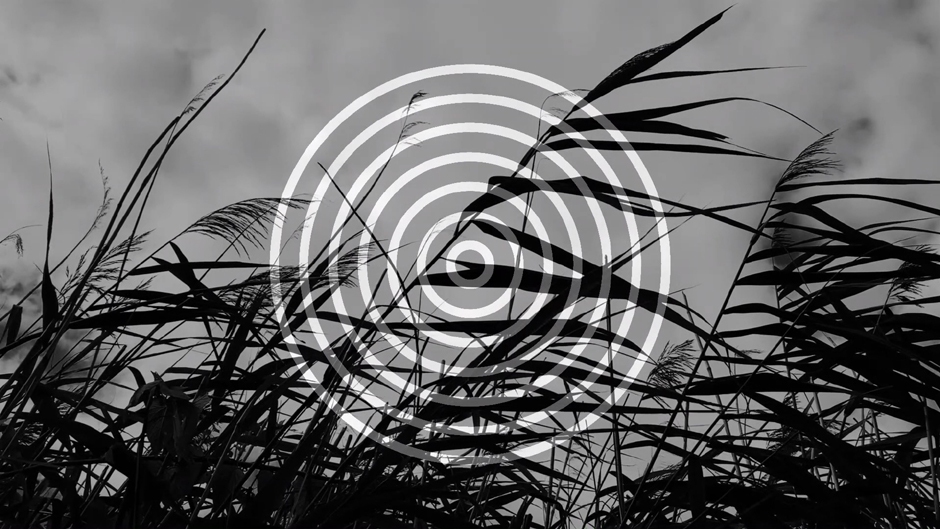
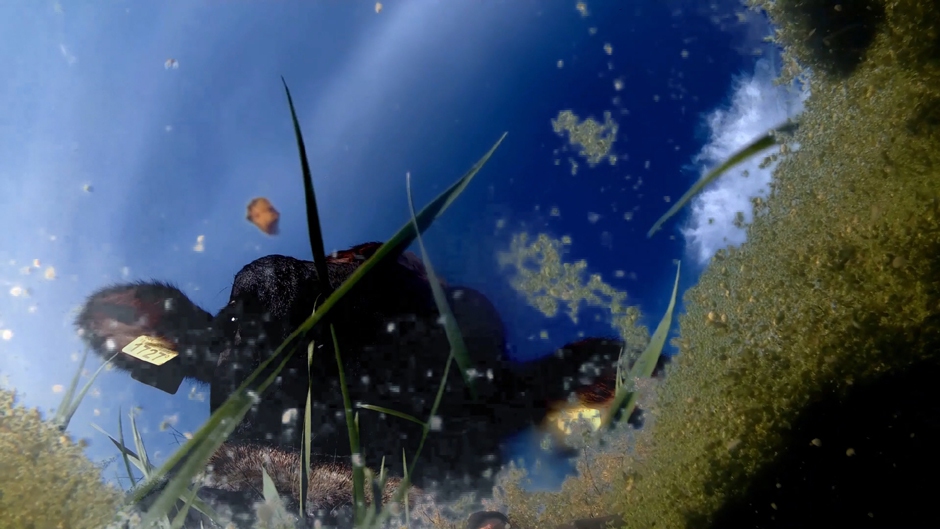
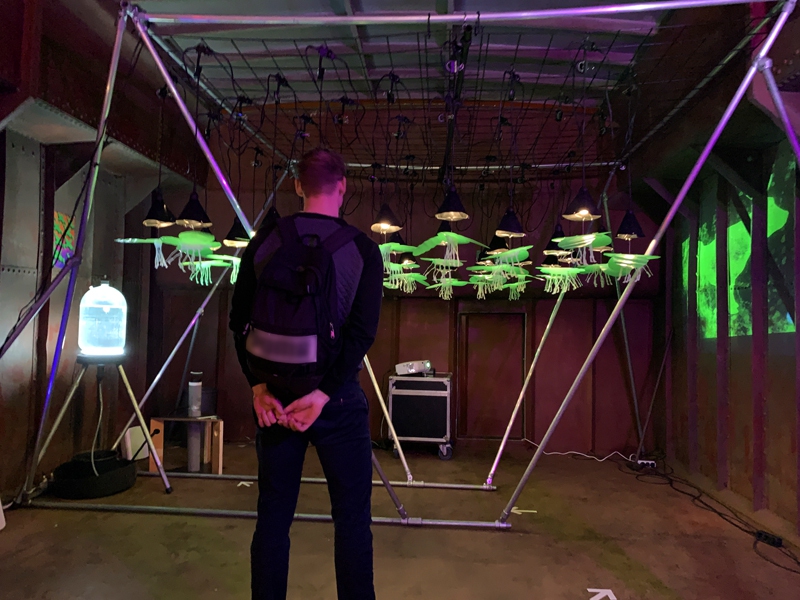
Deze video is onderdeel van een installatie met driedimensionaal werk, video en geluidscompositie. Ontwikkeld als Artist-in-Residence op uitnodiging van WUR LEAPT (Wageningen University & Research, Local Engagement for Accelerating the Protein Transition) door Eric Langendoen. De installatie richt zich op publiek van lichtfestivals, maar is ook aanpasbaar aan verschillende (binnen)locaties. Het biedt de bezoeker een blik vanuit een kroos-perspectief.

Toen ik werd gevraagd om een kunstproject te verzinnen in het kader van de eiwittransitie*, begon ik na te denken over de plek die dierlijke en plantaardige eiwitten hebben in ons fysieke en mentale landschap. De productie van dierlijke eiwitten heeft het landschap om ons heen gevormd. Boerderijen, weilanden, grazende koeien: het hoort bij onze geschiedenis het is deel van onze cultuur. Nostalgie overweldigt menigeen bij de gedachte aan het leven en de ambachten die daar bij horen: de boer, de kaasmaker, de slager, de kok. En we zijn er dol op: vlees, kaas, melk(producten).

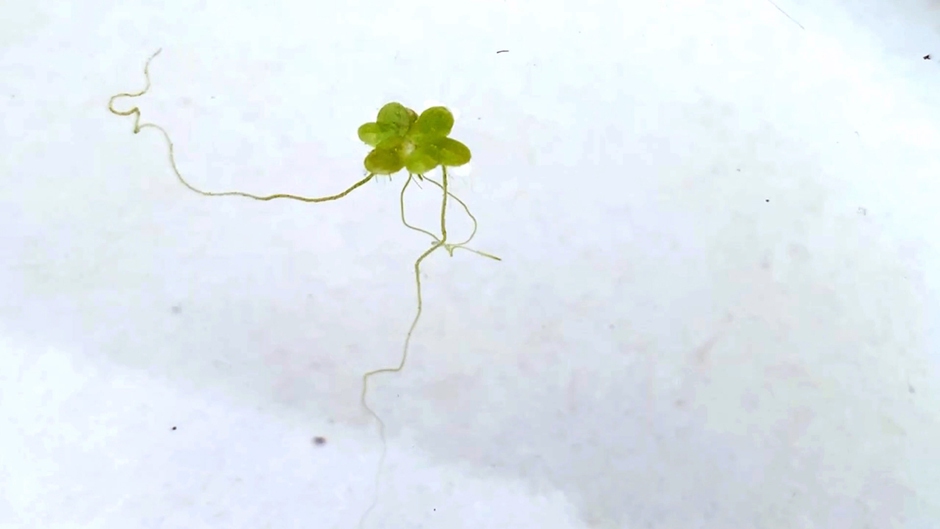
In de beginfase van dit project werd kroos goedgekeurd voor menselijke consumptie, naar aanleiding van onderzoek dat binnen de WUR daartoe werd gedaan. Daar was iets uit datzelfde landschap waar ik over nadacht: net zo gewoon als de dieren in de wei, alleen iets lager in je blikveld. Naast de
weilanden waar de makers van dierlijke eiwitten metaboliseren (laten we ze ‘koeien’ noemen), drijft in de
sloten de plantaardige proteïne van de toekomst. Al die tijd was daar al het kroos.

Wat me zo aanspreekt in kroos is dat het zo gewoon en bijna alomtegenwoordig is. Het is vrij beschikbaar, het deelt snel, je kunt er zo mee aan de slag. Maar let op: dit is volgens wetenschappers niet het idee dat ze willen overbrengen. De kweek moet (uiteraard) onder hygiënische, gecontroleerde omstandigheden gebeuren. Het moet efficiënt en rendabel zijn. De eiwitten moeten uit het kroos gewonnen worden en op de markt gebracht. Ik denk dan zelf: en hoe komt dat bij ons terecht? Via productontwikkelaars als eiwitpoeder of-pulp, als ingrediënt in een vegetarische schijf, bal of stukjes geseald in een plastic bakje voorzien van een sticker in een koeling in de supermarkt?

Terwijl je het ook vers zou kunnen halen, zoals we voor groenten vroeger naar de groenteboer gingen. Ik zie het al voor me: even naar de kroosboer op de hoek van de straat voor wat kroos en shiitake en een lekkere havermelk-macchiato tijdens het wachten. Tafeltjes met uitzicht op de kweekbakken, hippe muziek, aangename verlichting. De beste recepten met kroos uitgeprint om mee naar huis te nemen. Ik ben vooruit-nostalgisch naar zo’n plek. Ik hou van het tactiele van kroos, dat sierlijke plantje dat op het water danst. Ik stel me voor dat ik handenvol op m’n bord schep. Dat ik het uit mijn mondhoeken lik, tussen mijn tanden uit moet peuteren.

Ik ben kunstenaar en geen wetenschapper, dus ik weet niet hoe realistisch deze voorstelling is. Maar we zijn met z’n allen toch creatief: als we wiet kunnen kweken op zolder, waarom geen zolderkroos? In huis kweken we zwammen op koffiedik, kruiden in een potje op de vensterbank of het balkon. Fruit en groenten in de (gemeenschappelijke) tuin. De eiwittransitie moet om te versnellen volgens mij een plek krijgen in ons dagelijks leven, niet alleen in laboratoria en productiehallen.

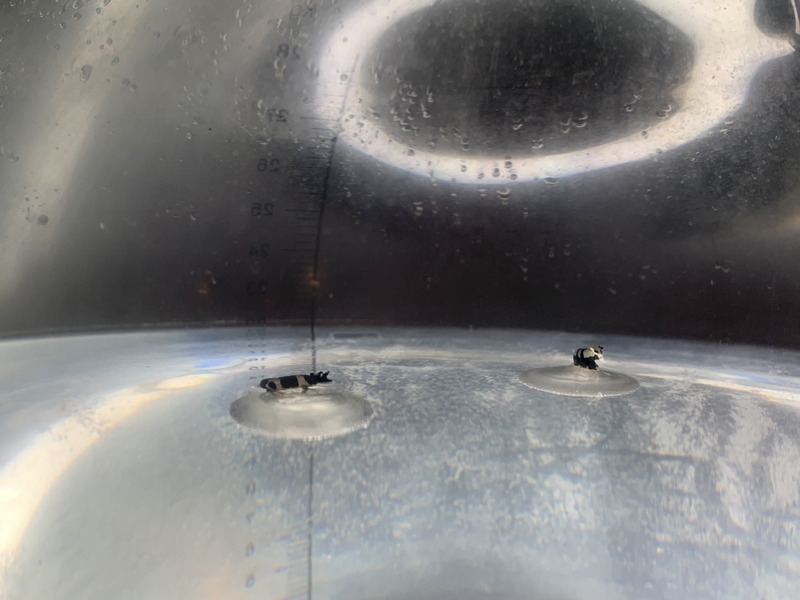
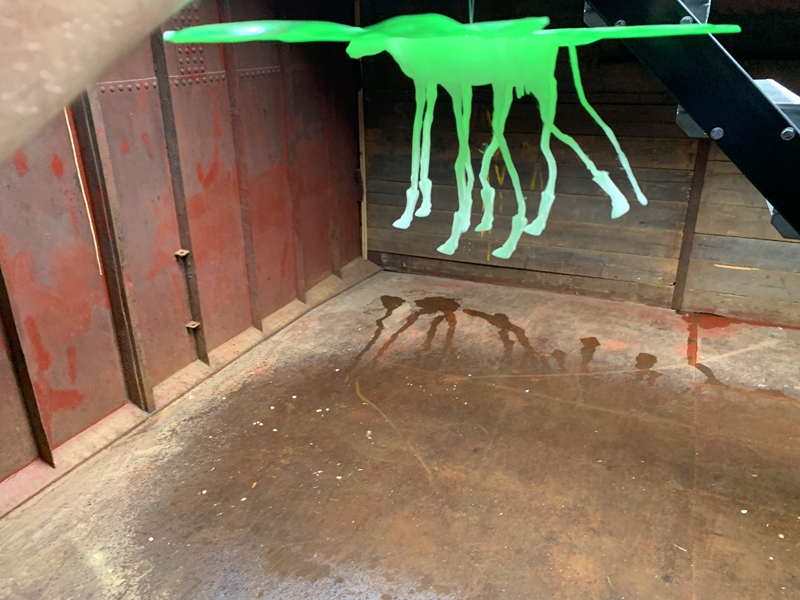
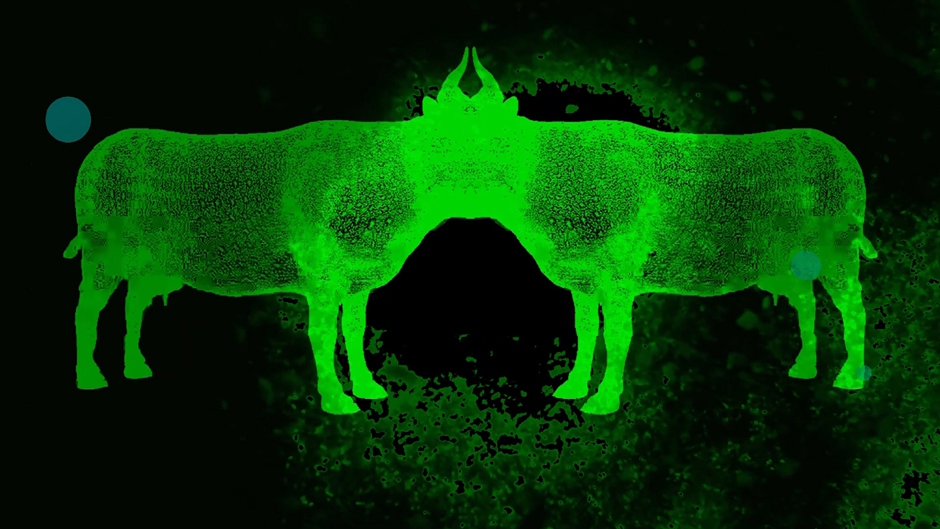
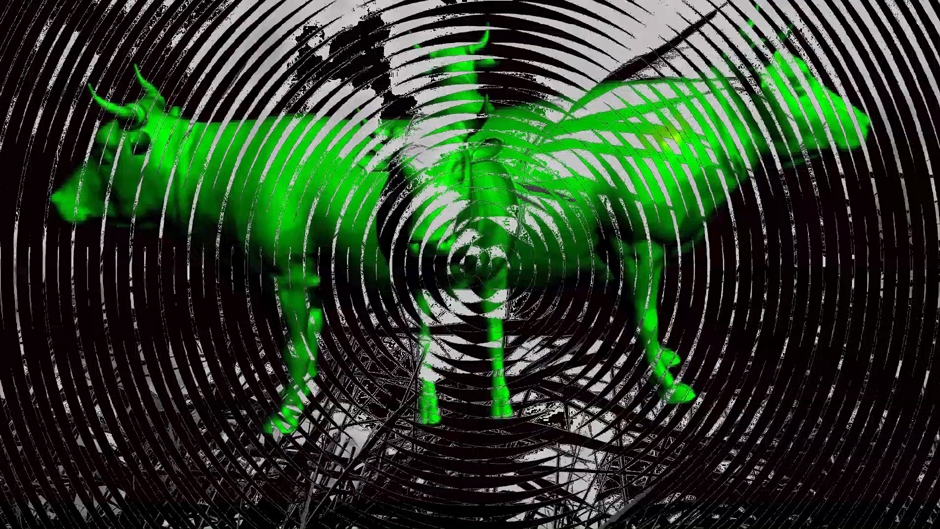
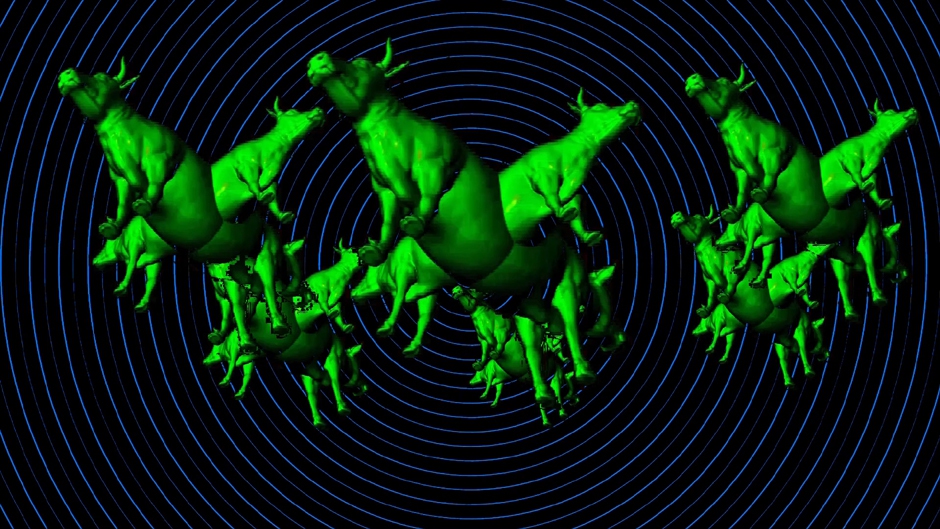
Mijn installatie romantiseert het idee dat koe en kroos de keerzijden van één ding zijn, dat koe en kroos zouden kunnen kruisen. Het verkleint de koe / vergroot kroos uit tot iets knuffelbaars. Want dat is ook wat we kunnen: van iets houden en het vervolgens opeten. Vereren en vervolgens offeren. Zoals jonge sla is bezongen in Nederlandse poëzie, zoiets verdient in mijn ogen het nederige kroos. Het brengt ook de transitie letterlijk in beeld: het plantaardige deel groter, het dierlijke deel kleiner dan we het kennen. De hybride heeft mythologische trekjes, ze drijft, zweeft, stijgt op. Het is, zoals de toekomst vaak begint, een droombeeld.

*Wat is eiwittransitie en waarom houdt de wetenschap (en politiek) zich daar mee bezig? En waarom zou ik dat doen?

Onder eiwittransitie verstaat men de overgang van een overwegend dierlijke naar een meer plantaardige eiwitconsumptie en -productie. Je kunt ––het willen om de stikstofproblematiek van een te grote veestapel te verminderen. Omdat het veel energie en geld kost om plantaardig voedsel in dieren te stoppen opdat ze vervolgens gegeten kunnen worden. Omdat je met dezelfde hoeveelheid plantaardig voedsel die je niet in dieren stopt meer mensen kunt voeden. Dus zou je op die manier in de toekomst honger kunnen voorkomen in een groeiende wereldbevolking. Het is vastgesteld dat het gezonder is om meer plantaardig en minder dierlijk te eten. Daarnaast zijn er ethische bezwaren die je kunt hebben tegen het geforceerd laten opgroeien en doden van dieren op industriële schaal. En zo zijn er vast meer.

[English] Koe-kroost: There’s a play of words in there. Explanation for non-Dutch speakers:
Koe = Cow. Kroos = Duckweed. Kroost: ‘Offspring’; ‘Brood’; ‘Progeny’.
A title to entice an international audience might be: ‘Protein Parallax’.

Installation with three-dimensional work, video, and sound composition. Developed as an Artist-in-Residence at the invitation of WUR LEAPT (Wageningen University & Research, Local Engagement for Accelerating the Protein Transition) by Eric Langendoen. The installation is aimed at light festival audiences, but can also be adapted to various (indoor) locations. It offers visitors a view from a duckweed perspective.

When I was asked to create an art project within the context of the protein transition*, I started thinking about the place animal and plant proteins have in our physical and mental landscape. The production of animal proteins has shaped the landscape around us. Farms, meadows, grazing cows: they are part of our history and our culture. Nostalgia may overwhelm many when they think of the life and the crafts that go with it: the farmer, the cheesemaker, the butcher, the chef. And we love it all: meat, cheese, dairy.

In the initial phase of this project, duckweed was approved for human consumption, based on research conducted within WUR. There was just the thing within that same landscape that I was thinking about: just as ordinary as the animals in the meadow, only slightly downward in our field of vision. Next to the meadows where the producers of animal proteins metabolize (let’s call them “cows”), the vegetable protein of the future floats in the canals around them. All this time, duckweed was there.

What appeals to me about duckweed is its commonness and near-ubiquity. It’s freely available, it divides quickly, and you can start working with it right away. But beware: this isn’t the idea scientists want to convey. Cultivation must (naturally) take place under hygienic, controlled conditions. It must be efficient and profitable. The proteins must be extracted from the duckweed and marketed. I then think to myself: and in what way does it reach us? Through product developers as protein powder or pulp, as an ingredient in a vegetarian disc, ball, or pieces sealed in a plastic container with a sticker in a supermarket’s refrigerated section? You could also buy it fresh, in the way we used to go to the greengrocer for vegetables. I can just picture it: popping over to the duckweed grocer on the corner for some duckweed and shiitake mushrooms and a delicious oat milk macchiato while we wait. Tables overlooking the grow chambers, hip music, pleasant lighting. The best duckweed recipes printed out for you to take home. I’m incredibly nostalgic in advance for such a place. I love the tactile quality of duckweed, that graceful plant dancing on the water. I imagine spooning handfuls of it onto my plate. Licking it from the corners of my mouth, having to pick it out from between my teeth.

I’m an artist, not a scientist, so I don’t know how realistic this image is. But we’re all creative, after all: if we manage to grow cannabis in our attics, why not attic duckweed? Indoors, we grow mushrooms on coffee grounds, herbs in pots on the windowsill or balcony. Fruit and vegetables in the (shared) garden. To accelerate the protein transition, I believe it needs a place in our daily lives, not just in laboratories and production facilities.

My installation romanticizes the idea that cow and duckweed are the reverse sides of one thing, that cow and duckweed might interbreed. It shrinks the cow/enlarges duckweed into something cuddly. Because that’s also what we can do: love something and then eat it. Revere it and then sacrifice it. Just as the praise of young lettuce has been sung in Dutch poetry, the humble duckweed deserves something similar in my view. It also literally visualizes the transition: the plant-based part larger, the animal-based part smaller than we have known it. The hybrid has mythological traits; it floats, ascends. It is, as the future often begins, a vision from a dream.

*What is protein transition, and why is science (and politics) so concerned with it? And why should I?
Protein transition refers to the shift from predominantly animal to more plant-based protein consumption and production. You might want to reduce the nitrogen problem caused by an overly large livestock population. Because it takes a lot of energy and money to feed plants to animals so they can successively be eaten. Because you can feed more people with the same amount of plant-based food that isn’t fed to animals. So, this way, you could prevent future hunger in a growing global population. It’s been established that it’s healthier to eat more plants and less animal products. Moreover, one could have ethical objections to the forced raising and killing of animals on an industrial scale. And no doubt there will be more reasons why.

Reacties zijn gesloten.